Feelings of Northern-ness extend south of the official border, while parts of East Anglia don’t feel Southern
Key takeaways
- 91-95% of those who live in the three northern regions see themselves as living in the North, with 81-94% of those in the South East, South West and London feeling they live in the South
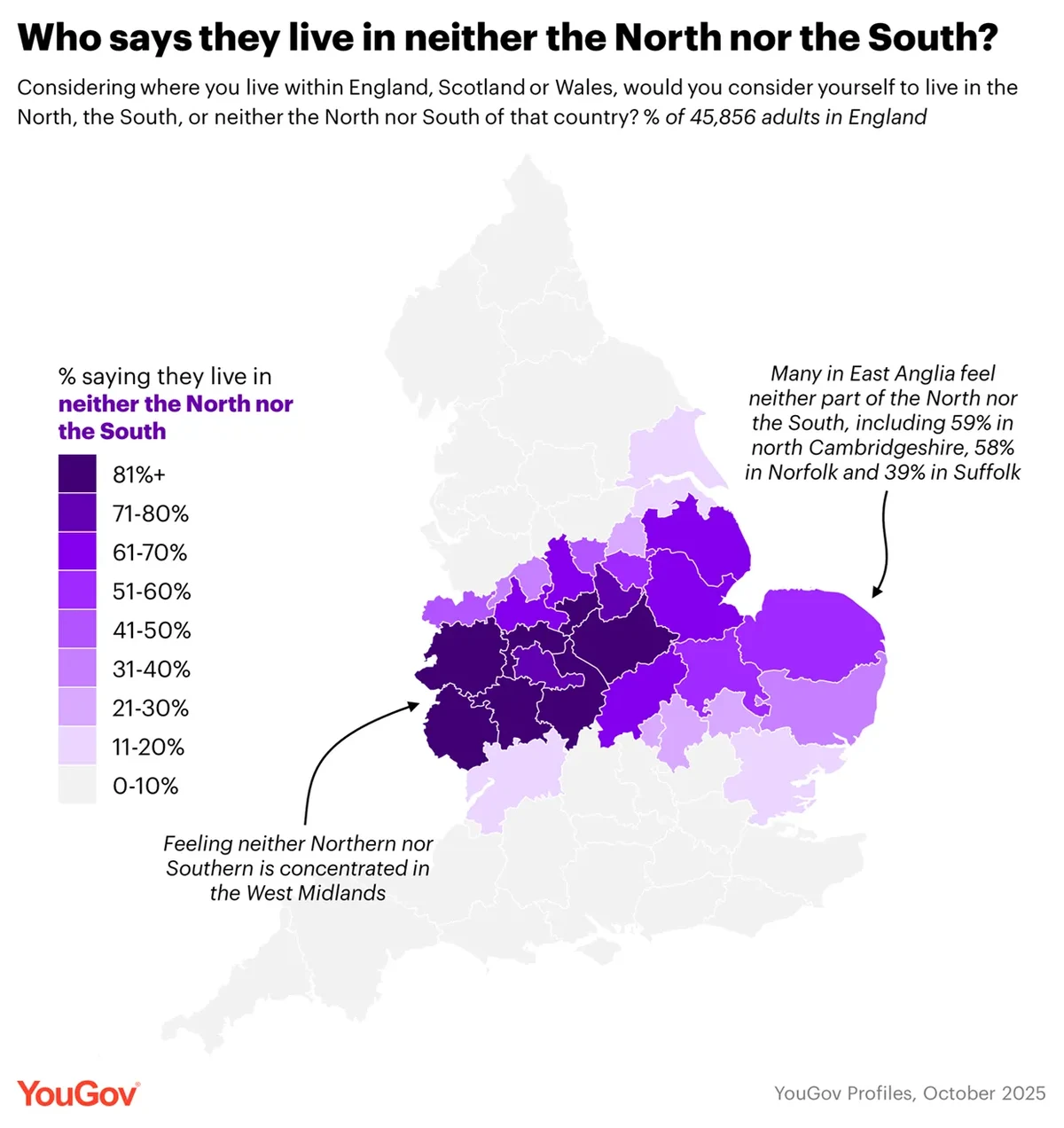
- 78% of those in the West Midlands and 69% in the East Midlands consider themselves to live in neither the North nor South, as do 28% of those in the East of England region
- Majorities in northern areas of the Midlands consider themselves to live in the North
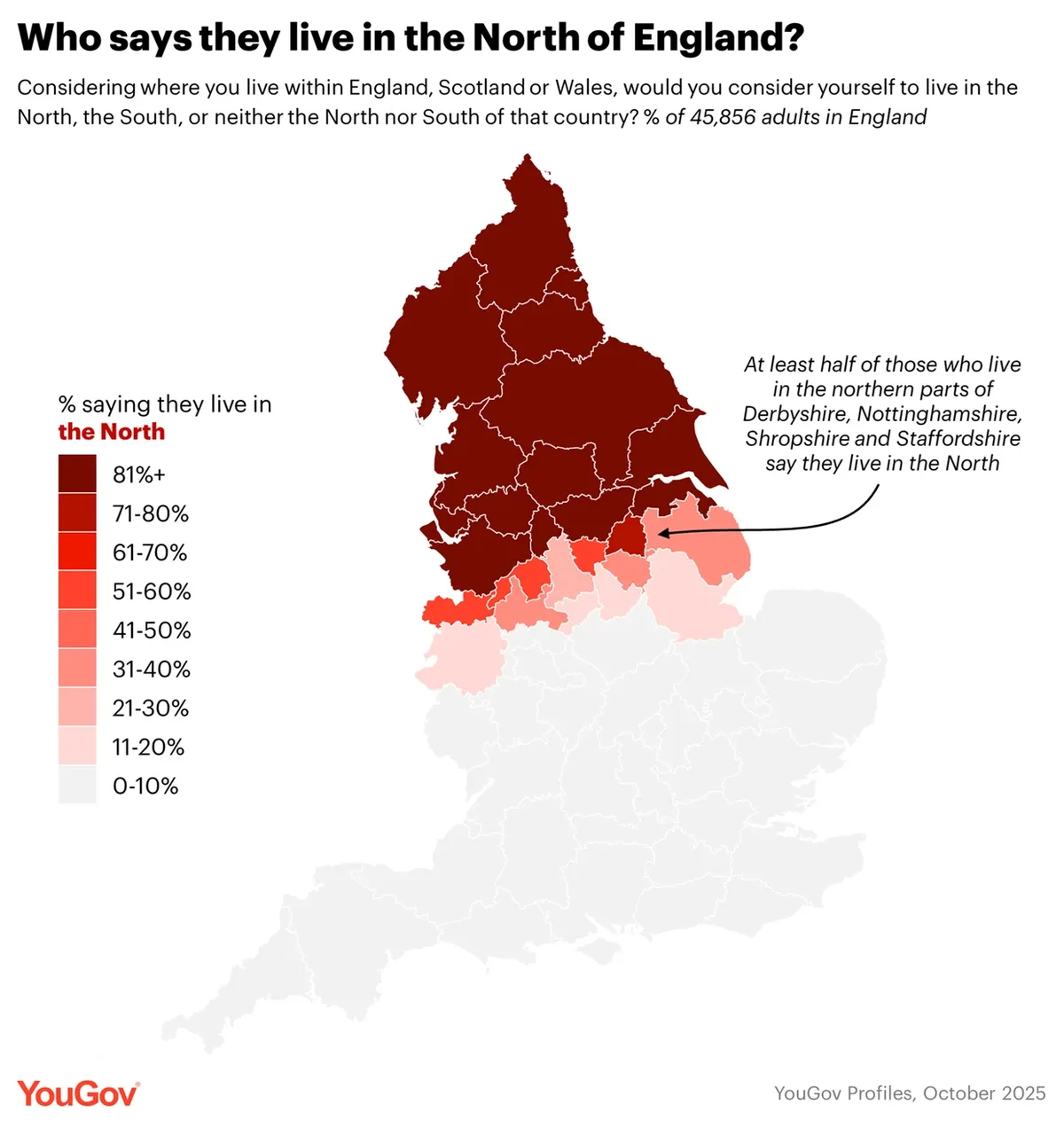
- Just a third of those in Norfolk and northern Cambridgeshire (33-35%) consider themselves to live in the South, despite often being classed as doing so
England’s North-South divide is well-known, stemming everything from language to culture to politics. It can be both the subject of serious analysis and light-hearted jokes. But despite all this, what actually constitutes “the North” and “the South” is the subject of disagreement.
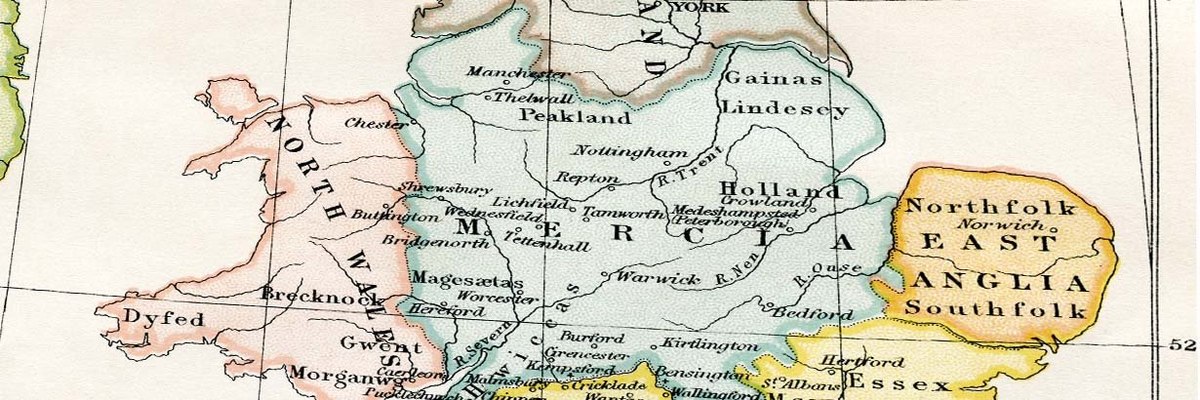
One common unofficial boundary is a line from the Severn Estuary just north of Bristol to The Wash between Lincolnshire and Norfolk, while alternatives have been based around the course of the River Trent.
Official groupings usually take the Midlands into account, with “the North” consisting of the North East, North West and Yorkshire and the Humber regions, and “the South” being made up of at least the South East and South West regions. But new YouGov data from nearly 46,000 adults in England reveals that many along the borders don’t place themselves in the same regions as government maps would dictate.
Do English people consider themselves to live in the North or South?
English people do largely conform to the typical formal regional categorisations. More than nine in ten of those who live in the three northern regions (91-95%) consider themselves to live in the North, while 94% of those in the South East, 89% of those in the South West and 81% of those who live in London consider themselves to live in the South.
Nearly eight in ten of those who live in the West Midlands (78%) say they neither live in the North nor the South, though this falls to 69% in the East Midlands, with a fifth of East Midlanders (22%) seeing themselves as living in the North of England.
The East of England region is similarly not unified on where it sees itself, with 67% adults who live there seeing themselves as living in the South but 28% saying they are in neither the North nor the South.
Of course, the 22% of East Midlanders who see themselves as living in the North aren’t equally distributed across the region. Using our extra large sample size, we can dig down to the county-level and even, where necessary, sub-county-level using groups of local authorities to see where regional identities truly lie.
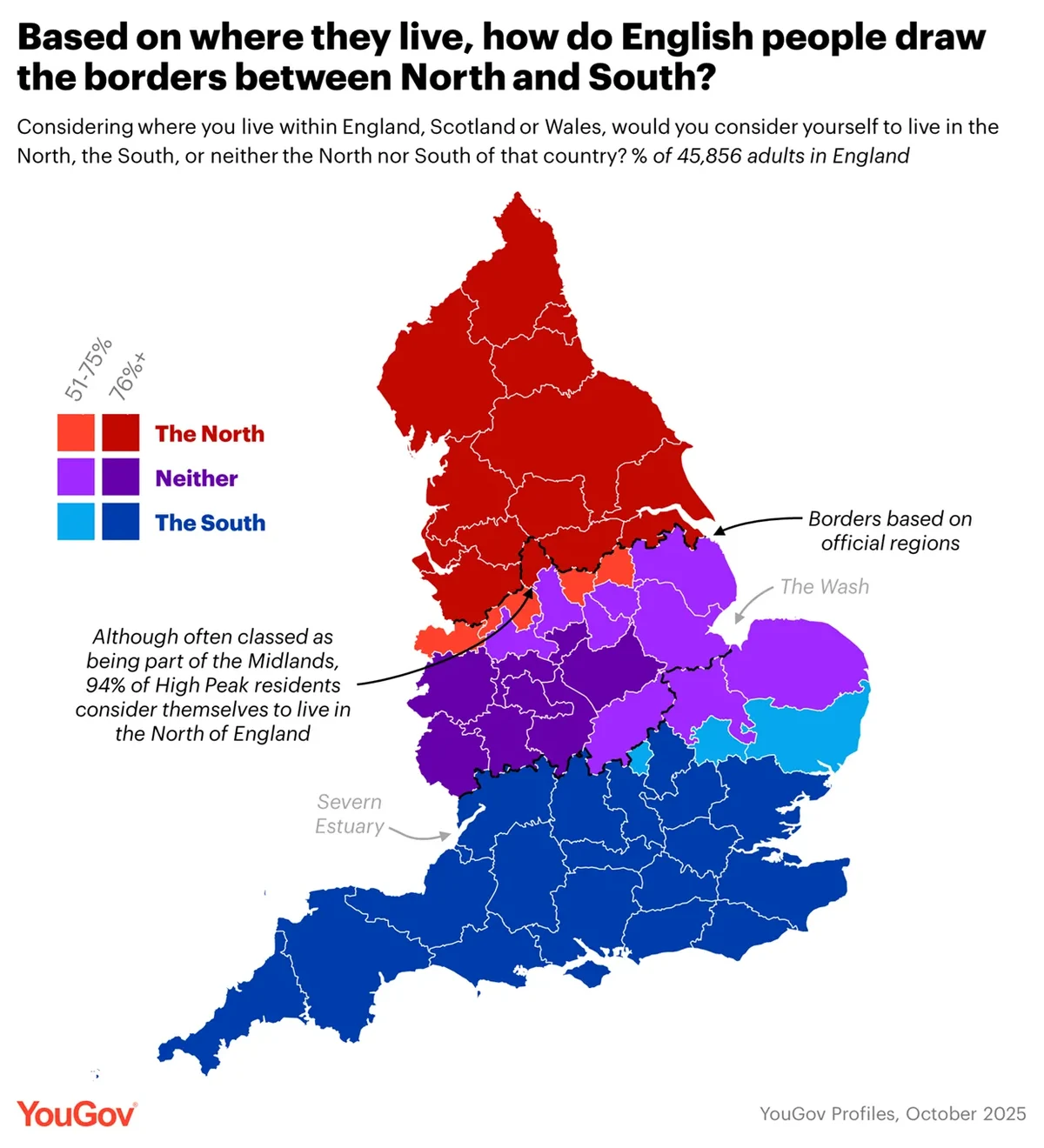
When looking at the majority view in each area, the results show that, based on where residents place themselves, the southern border of “the North” is a line roughly from Shrewsbury to Grimsby, while the northern border of “the South” is a horizontal line roughly from the Severn to Great Yarmouth.
Who says they live in the North of England?
Majorities of those living in the northern-most areas of the Midlands see themselves as living in the North. This feeling is most notable in the High Peak area of Derbyshire, where 94% of residents consider themselves to live in the North of England (although please note the smaller sample size of 91), putting it on a par with areas normally classified as part of the North.
Three quarters of those in the Bassetlaw district of Nottinghamshire (75%, smaller sample size of 98) also feel like they live in the North, as do 55-58% of those in north Shropshire, the Newcastle-under-Lyme and Moorlands areas of Staffordshire, and the parts of Derbyshire around Chesterfield and Bolsover.
Feelings of Northern-ness do continue a little further, with 30-39% of those who live in the central parts of Derbyshire, Lincolnshire, Nottinghamshire and Staffordshire seeing themselves as living in the North, as well as sizeable minorities of 17-20% of those who live in the southern parts of the first three counties.
Who says they live in the South of England?
Those living in the Anglian part of the East of England region most reject the idea of being in the South. While 87% of those in Hertfordshire, 83% of those living in Essex and 76% of Bedfordshire residents feel ‘Southern’, this falls to just half of people in Suffolk (53%), less than half of those in Cambridgeshire (46%) and just a third of those in Norfolk (35%).
And within Cambridgeshire there is a clear divide. While people in the southern parts of the county (Cambridge, South Cambridgeshire) feel like they're part of the South by 72% to 23%, those in the more northern parts (Fenland, East Cambridgeshire, Huntingdonshire, Peterborough) see themselves as living in neither the North nor South of England by 59% to 33%.
Few people in the South East and South West regions of England reject the ‘Southern’ label, although residents of Milton Keynes prove a notable exception, with a quarter (25%) feeling they’re neither in the North nor the South.
In contrast to Northern identity stretching into parts of the Midlands, there’s seemingly less desire to lay a claim to being Southern. Beyond 21% of people living in Northamptonshire and 12% in Herefordshire, few in the Midlands see themselves as living in the South.
Where do people feel neither Northern nor Southern?
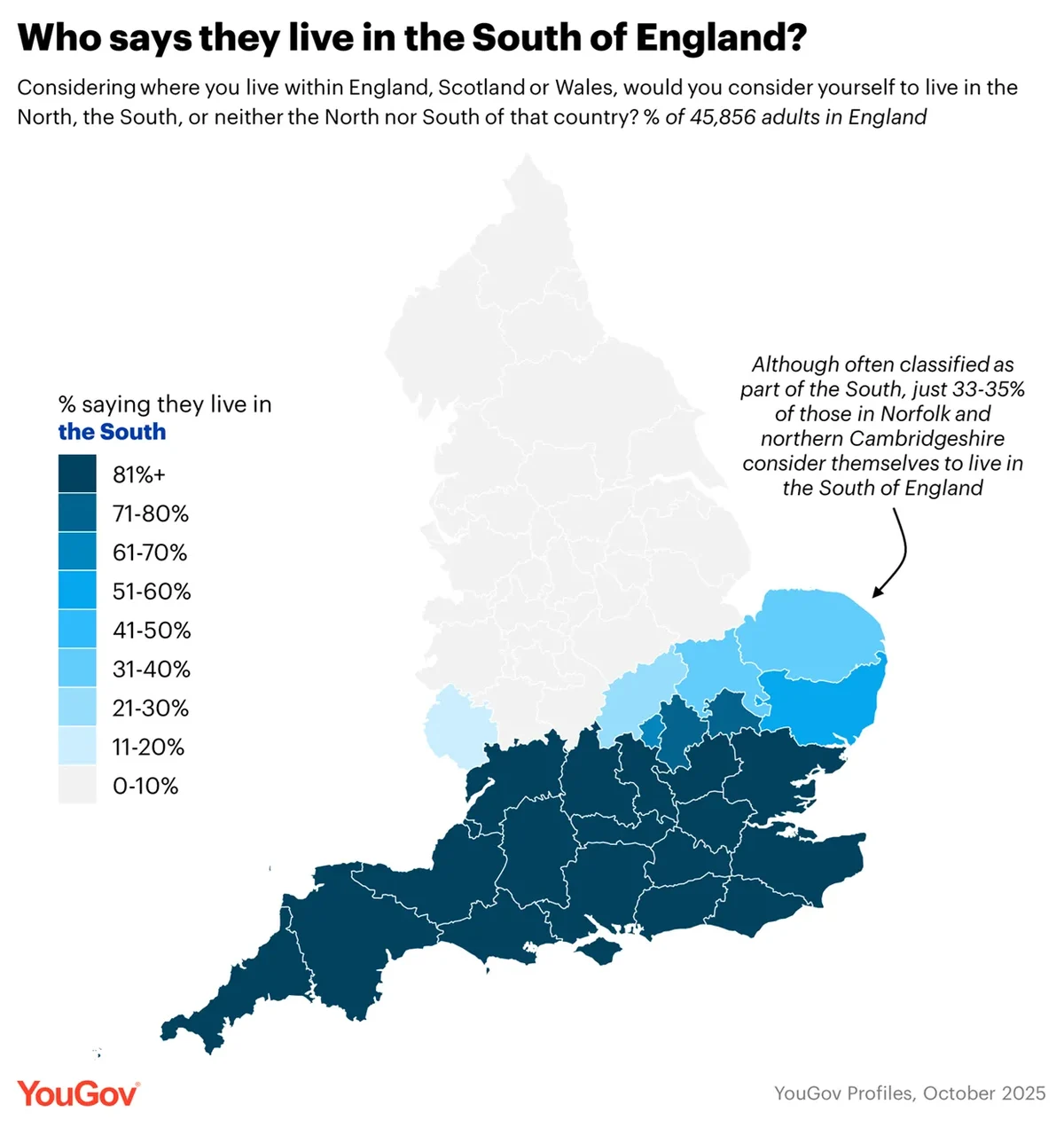
Acceptance of their Midlands status is highest in Warwickshire, Leicestershire and Rutland, and Worcestershire, where 85-87% say they live in neither the North nor the South, though it is the majority view across all but the most northern parts of the Midlands, as well as in Norfolk and the northern half of Cambridgeshire. Four in ten Suffolk residents (39%) also see themselves in this third category.
Pockets of neither-ness do, though, continue further into parts of the South, with 14% of those in Gloucestershire and 12% of those in Essex feeling where they live is neither in the North nor the South.
Perhaps indicative of their distinct identity, 10% of those in Cornwall, England’s southernmost county, see themselves as not part of the South of England.
Interested in taking YouGov surveys? Where do you think the North begins? What do you think about English regional divides in general, and everything else? Have your say, join the YouGov panel, and get paid to share your thoughts. Sign up here.
Interested in commissioning YouGov research? We connect in real-time with real people around the world to gather their thoughts, behaviours, and opinions, to ensure that our research data is powered by reality. Explore our survey services here.
Photo: Getty