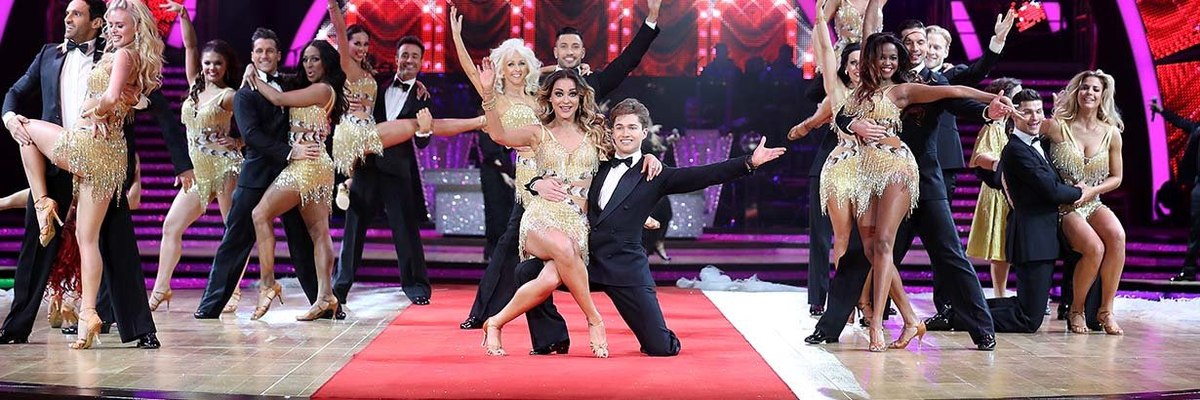
While 42% of Britons say they outright like to dance, just 7% say they’re prepared to get the dancing started
Key takeaways
- Britons are more likely to say they like to dance (42%) than dislike dancing (28%)
- 7% of Britons say they get the dance started
- While 58% of women say they enjoy dancing, this is true of just 25% of men
- Just 23% of Britons would describe themselves as being good dancers
- Britons are more likely to favour a fast dance (27%) to a slow dance (9%), though most (54%) have no preference
Tomorrow’s final of Strictly Come Dancing marks the end of era, with Tess Daly and Claudia Winkleman, who have been involved in the programme for over 20 years, hosting the show for the last time. The BBC have said that Strictly will return with new hosts, but in the meantime, will Britain keep dancing?
Overall, four in ten Britons say they love (12%) or like (30%) to dance, while a further 29% say they neither particularly like nor dislike dancing. Just over a quarter of Britons say that they personally dislike (17%) or hate (11%) dancing.
Women are far more likely to say they enjoy a bit of boogieing, with 58% saying they love or like to dance, compared to just 25% of men. By contrast, men are roughly three times more likely than women (43% vs 13%) to say they dislike to dance.
When the time comes, SEV-EN% of Britons say they get the danced started, with a further 33% saying they are happy to join in, but only once others have started. Just over one in five (22%) say they have to be dragged onto the dancefloor but will dance.
Nearly three in ten (28%) say they would avoid dancing, if there was the option.
Do Britons think they can dance?
While most Britons are prepared to get in the groove, even if reluctantly, few feel they are particularly skilled, with just 23% of Britons rating their dancing ability as at least fairly good, compared to 67% who would describe themselves as a bad dancer.
Women are more likely to see themselves as good dancers, with 31% saying so, relative to just 16% of men.
But for most, it’s enjoyment that matters, not skill. More than eight in ten Britons (84%) say it is better to watch people having fun while they dance, even if they’re not dancing well, with only 5% saying they’d rather watch people dancing well, regardless of whether they were having fun.
Likewise, although there is a relationship between self-rated dancing ability and attitudes to dancing, just 38% of those who feel they are bad at dancing say they dislike or hate dancing, with 28% of those with two left feet outright enjoying showing off their moves, or lack of them.
How do Britons prefer to dance?
While most Britons (54%) say they don’t have a strong preference either way, 27% of Britons say they prefer a fast dance to a slow dance, three times the 9% who’d rather sway than shimmy.
A preference for a quicker beat is much stronger among women, who favour a fast dance by 35% to 6%, while men are more divided, with 18% enjoying a fast dance more and 12% who’d pick a slower groove.
How often do Britons dance?
Although most Britons might be prepared to keep dancing, this may not be on a regular basis. Even at home, just one in six Britons (16%) say they are busting out their moves at least once a week, with this only widening to a quarter (26%) doing so at least once a month.
One in six Britons (17%) say they dance at home less often than once a year, while a further 32% say they would never boogie at home.
Giving it a whirl in a public place is rarer, with just 6% of Britons saying they’d usually dance in public at least once a month, though this widens to 31% expecting to have a bop out and about at least once a year. Four in ten Britons (40%), however, say they never dance in public.
Younger women are particularly likely to be up for a domestic disco, with 38% of 18-34 year old women saying they typically expect to dance at home at least once a week, alongside 24% of 35-49 women, 17% of 50-64 year old women and 11% of over 65 women.
This compares to 15% of 18-34 men, 12% of 35-49 year old men and only 2-4% of men in older age groups.
When do Britons feel comfortable dancing?
Self-consciousness can be a big part of why some people dislike dancing. Indeed, 20% of Britons even say they would feel uncomfortable dancing at home by themselves.
Unsurprisingly, more say they would feel uncomfortable dancing when other people are around, though this does depend to a degree on who they are around. The roughly four in ten Britons uncomfortable when grooving at a party with friends (38%) or family (41%) is significantly lower than the six in ten (59%) who would feel uncomfortable throwing shapes at a work party around colleagues.
Once again, there are sizeable gender divides, with women consistently more likely to say they would feel comfortable dancing in any of the four situations asked about. But this hides distinct age differences within each scenario.
Nine in ten 18-34 year old women (92%) say they would feel comfortable dancing at home by themselves, compared to 76% of women over the age of 65. This same age divide is true, to an even larger extent, though at a lower level, among men, with 77% of 18-34 year old men comfortable dancing alone at home, relative to just half of over 65 men (49%).
When it comes to dancing with your family, though, these age differences have all but disappeared, with very little difference between younger and older women (63% vs 63%) or younger and older men (46% vs 49%).
And when it comes to dancing at a work party, younger women are one of the least likely groups to feel comfortable, with just 28% of 18-34 year old women saying they’d feel okay busting their moves on such an occasion, near identical to the 29% of men in their age group who’d feel they same, and compared to 40-41% of women in older age groups.
Interested in taking YouGov surveys? Do you prefer a fast or a slow dance? What do you think about dancing in general, and everything else? Have your say, join the YouGov panel, and get paid to share your thoughts. Sign up here.
Interested in commissioning YouGov research? We connect in real-time with real people around the world to gather their thoughts, behaviours, and opinions, to ensure that our research data is powered by reality. Explore our survey services here.
Photo: Getty