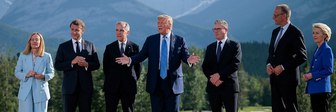

The continent is divided in whether to keep supporting Ukraine or encouraging a negotiated peace, and suspect Donald Trump wants Russia to win
While talks continue to drag on over how to bring the war in Ukraine to a close, there seems to have been fresh impetus for securing an end to the fighting lately.
Last month saw Donald Trump release a 28-point plan for peace in Ukraine, followed in turn by a counter-proposal from Britain, France and Germany.
Now YouGov’s latest European Political Monthly, which examines public attitudes in France, Germany, Italy, Spain and Poland – as well as comparison data from the UK – pulled a mixture of proposals from both documents and asked Europeans whether they considered them to be acceptable or unacceptable terms for a peace deal.
By far the most popular – but also the least likely – is for the reconstruction of Ukraine to be paid for by Russia, a feature of the European peace proposals. This element received net acceptability scores of between +43 and +67 in each country surveyed.
The only other potential peace deal term we asked about that is also net acceptable in all countries (between +13 and +53) is the proposal for Ukraine to have eligibility for EU membership and have short-term preferred market access to Europe while that is being evaluated, a feature of both the US and European plans.
When it comes to peace deal terms that are seen as net unacceptable in all countries, these include barring Ukraine from NATO; inviting Russia back to the G8; capping the Ukrainian military at 600,000, amnesty for all parties in the conflict; and allowing Russia to keep captured territory.
While Britons are otherwise consistently the most likely to oppose these terms for the peace deal, there is one exception: Germans prove by far the most likely to say an amnesty for war crimes is unacceptable, at -53 compared to between -16 and -32 in other countries.
Italians, by contrast, are typically among the most willing to say find these terms acceptable.
Do Europeans still want Ukraine to win? And are they willing to support Ukraine until it does so?
Close to two-thirds in the UK (70%), Spain (66%), and Poland (65%) say that they want Ukraine to win the war, and that they care a great or fair amount that it does so, as do a majority of Germans (54%).
However, this falls to only 40% in France, and just 33% in Italy.
While Europeans might not like the idea of Russia being left in control of Ukrainian territory, that does not mean they aren’t willing to countenance it.
Britain stands alone in being particularly more likely to want to support Ukraine until it prevails against Russia, with 48% saying so versus 24% who would prefer to encourage a negotiated end to the conflict, even if it left Russia in control of conquered territory.
Poles are slightly more likely to favour continuing the fight, at the much lower rate of 38%, with 32% preferring a negotiated deal.
Italians, by contrast, are the most in favour of a diplomatic end to the conflict, at 53%, with only 20% willing to keep backing Ukraine indefinitely.
Does Donald Trump want Ukraine to win? Europeans suspect not
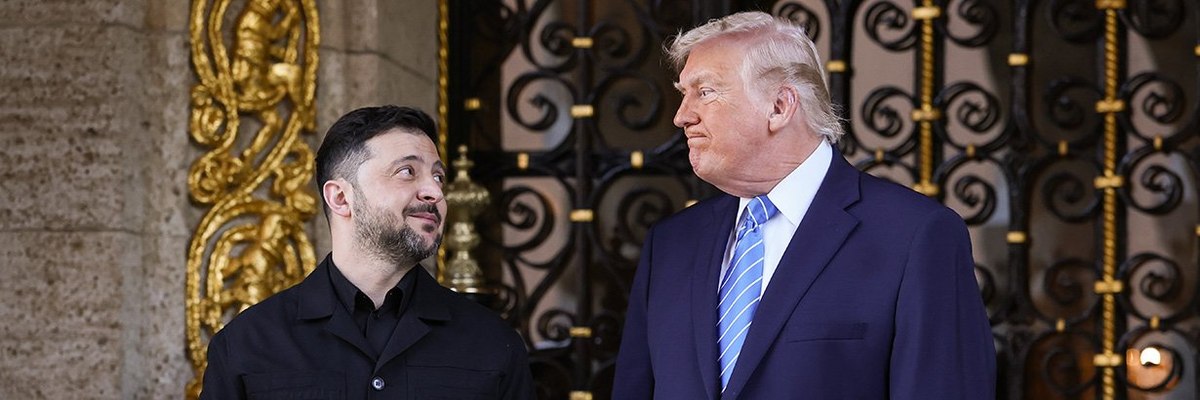
The terms of the US deal were generally seen as having closely mirrored Russia’s demands, and there have long been suspicions that Donald Trump is much more sympathetic to Russia’s Vladimir Putin than he is to Ukraine’s Volodymyr Zelenskyy.
Indeed, our survey shows that Europeans tend to think that the US president wants Russia to win the war, with 48-52% in each of Britain, France, Italy and Spain saying so*. A plurality of Poles say likewise, at 37%.
Between 17% and 29% in each country believe Trump has no preference over who wins the war; in each country, this figure is higher than the number who think he wants Ukraine to win (7-16%).
Europeans think Russia would invade Ukraine again within a decade
While many Europeans may want a peace deal, there are also strong suspicions that honour has no intention of keeping to it for long. Between 45% and 72% think Russia would be likely to invade Ukraine again within 10 years if the country agreed to a peace deal.
Indeed, many also believe that Russia intends to attack further European countries within the next 10 years; only in Italy is this not the most common expectation.
Do Europeans support sending soldiers to be peacekeepers in Ukraine?
One much touted proposal in the aftermath of a peace deal is for European peacekeepers to be stationed in Ukraine. The proposal has majority support in Spain (63%) and the UK (56%), but the other countries are largely divided.
Is the US a reliable NATO partner?
Russia’s most likely next targets in Europe would be the Baltic states – all of which are NATO members. In the event that Russia did invade Latvia, Lithuania and/or Estonia, European opinion is mixed on whether or not the USA would honour its NATO obligations and come to their aid.
Poles are the most optimistic, with 50% believing that they would, followed by 47% of Spaniards. However, Italians, Germans and the French are largely split, while Britons are generally negative: 45% expect that the USA would not stick with its Article 5 NATO commitment to protect its fellow members, while just 27% are optimistic.
When it comes to whether or not the Americans would protect their own countries in the event of a Russian attack, a slim majority in the UK, Germany, Italy and Poland think that they are likely to do so (51-54%), while Spaniards are divided 40%-40% and the French 37%-35%.
* due to a translation error, this question has been removed from the Germany results
Interested in taking YouGov surveys? What do you think about the proposed peace terms for the Ukraine war, the conflict in general, and everything else? Have your say, join the YouGov panel, and get paid to share your thoughts. Sign up here.
Interested in commissioning YouGov research? We connect in real-time with real people around the world to gather their thoughts, behaviours, and opinions, to ensure that our research data is powered by reality. Explore our survey services here.
Photo: Getty